Experience
Basement Sewage Cleanup in Birmingham
Basement sewage backup creates an immediate health and property problem: standing blackwater, contaminated materials, and hidden moisture can damage structure and create health risks. Basement Sewage Cleanup removes sewage, disinfects affected areas, and restores sanitary conditions so the space is safe to reoccupy. This page explains what that service includes, how professionals approach emergency sewage cleanup, sanitation and decontamination services, and what you should expect when arranging cleanup in Birmingham, AL.
What is Basement Sewage Cleanup?
Basement Sewage Cleanup is the professional removal of raw sewage (blackwater) and the sanitation and decontamination of surfaces, materials, and building cavities affected by sewage intrusion. A cleanup addresses visible waste, contaminated porous materials, and microbial contamination that follows a sewage event. Professionals remove biohazardous materials, perform cleaning and disinfection, and take steps to control moisture and odors.
A professional inspection identifies the source and extent of contamination and reveals concealed moisture in walls, floors, and insulation. Property conditions affect service requirements because porous building materials and the time water has been present change what must be removed or remediated. Regular maintenance of sump pumps and sewer connections reduces the chance of avoidable backups, but when sewage reaches the basement, timely professional response reduces risk.
What does Basement Sewage Cleanup include?
A complete Basement Sewage Cleanup typically includes assessment, containment, removal of contaminated solids and porous items, cleaning, sanitation, drying, odor control, and final inspection. Technicians identify and remove unsalvageable materials such as soaked carpeting, drywall, and insulation, then clean and disinfect remaining surfaces. The goal is to eliminate pathogens, stop cross-contamination, and lower moisture to levels that discourage microbial growth.
Sanitation and decontamination services use EPA-registered disinfectants and application methods appropriate to the surface and contamination level. Mechanical actions—scrubbing, HEPA vacuuming, and pressure washing where appropriate—help remove solids before disinfection. Moisture control often involves drying equipment, moisture mapping, and follow-up monitoring to verify conditions are safe for restoration work.
Who may need Basement Sewage Cleanup and when?
You need Basement Sewage Cleanup when raw sewage, sanitary sewer overflow, or septic backup enters your basement or crawlspace and cannot be cleaned safely with household supplies. Emergency sewage cleanup is necessary when water contains fecal matter, industrial waste, or other hazardous contaminants that pose health risks. If sewage has pooled for more than a few hours, or if contaminated materials are widespread, professional attention is usually appropriate.
Homeowners, landlords, and property managers facing overflowing sewer lines, blocked drains that back up into the basement, or failed sump pumps commonly require these services. Early professional assessment reduces the chance that hidden contamination will cause mold growth, structural deterioration, or long-term odor issues. If anyone in the home has respiratory sensitivity, immune compromise, or chronic illness, prioritize professional cleanup because exposures carry greater risk.
Why are emergency sewage cleanup, sanitation and decontamination services important?
Emergency sewage cleanup matters because raw sewage contains pathogens, bacteria, and chemicals that can create immediate and long-term health hazards. Sanitation and decontamination reduce pathogen levels and lower the risk of infection. They also prevent secondary problems such as mold growth and structural damage that increase repair costs and downtime.
Containment prevents contaminated materials from spreading to unaffected spaces during cleanup. Professionals use negative air, barriers, and controlled work zones to limit cross-contamination. Documenting conditions with photographs and written assessments also helps you communicate with insurance adjusters and contractors during repairs.
How does the Basement Sewage Cleanup process work?
A typical professional process follows logical, safety-focused steps: initial contact, on-site assessment, scope identification, preparation, service execution, inspection/quality checks, completion, and follow-up monitoring. Each step refines the scope and ensures worker and occupant safety while addressing contaminants.
- Initial contact: You describe the situation and, when possible, provide photos and information about the source and timing of the backup. Early details help responders bring appropriate equipment.
- Assessment: Technicians perform a visual inspection, test moisture levels, and identify contaminated materials and structural concerns. A professional inspection identifies system problems and containment needs.
-
Scope identification and preparation: Teams list salvageable versus unsalvageable items, set containment barriers, and prepare PPE and equipment. Containment reduces cross-contamination to other rooms.
- Service execution: Workers remove solids and contaminated materials, clean non-porous surfaces, apply disinfectants, and deploy drying equipment. Mechanical cleaning and HEPA vacuuming typically precede chemical disinfection.
- Inspection and completion: Technicians verify moisture reduction and sanitation effectiveness using moisture meters and visual checks. They provide a written report describing actions taken and any recommended repairs.
- Follow-up: Professionals may return to confirm drying, check for odors, and advise on reconstruction or mold prevention. Ongoing monitoring helps you know when restoration contractors can safely begin repairs.
What factors affect Basement Sewage Cleanup?
Service requirements depend on source, contamination level, time elapsed, building materials, and access. Sewage from a sanitary sewer line differs from a minor drain backup; the former often contains higher pathogen loads and may require more extensive removal. Professionals assess these differences to set treatment levels.
Porous materials such as carpets, padding, drywall, and insulation often require removal because they trap bacteria and retain moisture. Non-porous surfaces like concrete and finished tile are more likely to be salvageable after cleaning and disinfection. Accessibility affects labor and equipment needs—tight crawlspaces can increase time and specialized gear.
Weather and building systems can influence drying time and ventilation choices. Ambient humidity and indoor/outdoor temperature sometimes affect how drying equipment is staged and how long dehumidification is needed. Professionals assess conditions and adjust drying strategies accordingly.
What should you expect from Basement Sewage Cleanup services in Birmingham, AL?
Expect a safety-first approach: containment, PPE, and protocols to reduce health risks during the service. Technicians should explain their plan before work begins, including what will be removed, what will be cleaned, and how waste will be handled. A clear scope of work helps set expectations for time and follow-up.
Expect documentation: photos, lists of removed materials, and notes about moisture readings and disinfectants used. Documentation assists in insurance conversations and later restoration. You should also receive recommendations for repair contractors if structural components require replacement after drying.
Expect communication about occupancy and safety: providers should tell you whether parts of the home are safe to reenter and which protective measures to take. Professionals assess indoor air and odor levels and advise on restrictions for vulnerable occupants.
How should you prepare before the technicians arrive?
First, stop the source if possible: shut off water to fixtures involved and avoid power to affected circuits if water contacts electrical outlets—only if it is safe to do so. Turning off electricity in the affected area reduces electrocution risk during initial inspection.
Second, clear a safe access path and move salvageable items from unaffected areas. Do not attempt to clean soaked porous materials yourself; moving dry personal items out of the work zone helps protect them from cross-contamination. Provide technicians with clear information about the timing and origin of the backup.
Third, notify your insurer and have any relevant policy details ready. Professionals can document damage in ways that insurers recognize, but each policy differs in coverage and requirements for mitigation. If occupants have health concerns, arrange alternate accommodations until sanitation and drying are verified.
What equipment and materials are typically used?
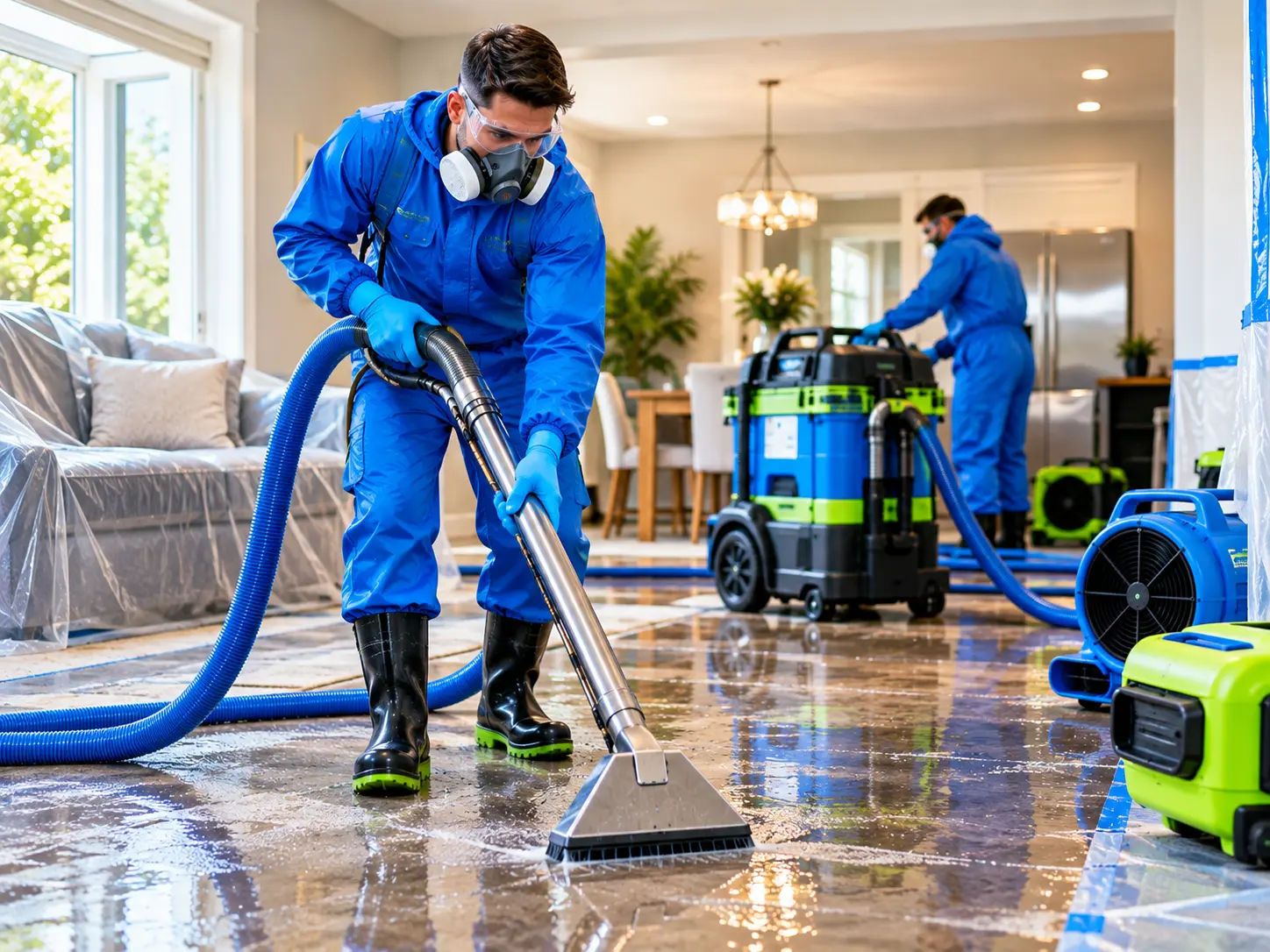
Technicians commonly use protective personal equipment (PPE), containment materials, extraction pumps, HEPA vacuums, air movers, dehumidifiers, moisture meters, and EPA-registered disinfectants. Each item serves a clear role: extraction pumps remove standing water, HEPA vacuums capture particulates, and dehumidifiers reduce humidity that sustains microbial growth.
Containment can include plastic sheeting, temporary barriers, and negative-pressure setups that prevent contaminated air from moving into clean areas. Absorbents and disposal containers for biohazardous waste are used for solids and saturated materials. Mechanical agitation—pressure washers, scrubbers—may be part of cleaning on exterior-hard or non-sensitive surfaces.
Technicians also use moisture meters and infrared cameras to locate concealed moisture and to document drying progress. Moisture mapping helps determine which materials must be removed and when drying goals have been achieved.
What safety considerations apply during sewage cleanup?
Safety centers on preventing exposure to pathogens, chemical hazards, electrical risks, and structural hazards. Professionals use PPE—gloves, eye protection, respirators when necessary—and follow decontamination steps to avoid transferring contaminants. Avoiding direct contact with raw sewage and contaminated materials reduces infection risk.
Electrical safety is crucial when water reaches outlets, panel boxes, or appliances. A licensed electrician may be necessary to make areas safe before technicians work with water and power near each other. Structural hazards such as saturated flooring or compromised framing require visual assessment because loads and stability can change after prolonged moisture exposure.
Disinfection involves chemicals that must be used according to manufacturer guidance and local regulations. Technicians apply disinfectants in ventilated conditions and follow dwell-time recommendations to ensure effectiveness. If you have concerns about chemical sensitivities or occupant health, discuss alternatives and ventilation plans with the provider.
How do professionals handle waste disposal and regulatory concerns?
Professionals separate regulated biohazardous waste from general construction debris and package it according to applicable disposal regulations. Waste from sewage cleanup often requires disposal at facilities equipped to accept contaminated materials. A provider familiar with local waste acceptance requirements reduces the risk of improper disposal.
A documented chain-of-custody for biohazardous loads is not always required for residential jobs, but respectful handling and proper manifests or receipts from disposal facilities provide proof that materials were disposed of properly. Local disposal rules and landfill policies can influence where and how waste is handled.
Professionals also document sanitation steps and final conditions to support property owners during insurance claims or municipal inquiries. If structural restoration requires permits, providers can advise on which trades are necessary and what documentation to retain.
What influences cost and duration of Basement Sewage Cleanup?
Costs and timeframes vary because contamination level, amount of water, types of materials affected, accessibility, and necessary equipment all influence effort. A small, quickly contained backup that affects only tile floors and non-porous surfaces typically requires less labor and shorter drying than a sustained overflow that soaked wall cavities and insulation.
Other cost drivers include the need to remove and replace structural materials, specialized containment systems, and the requirement for additional trades such as electricians or plumbers. Seasonal conditions and local disposal fees can also change practical costs. Professionals assess these variables and provide an estimate based on observed conditions.
Duration depends on extraction speed, drying goals, and whether porous materials require removal and replacement. Drying often proceeds in parallel with cleaning and disinfection, but full moisture remediation can take days to weeks depending on the severity. Professionals assess and set realistic timelines after the initial inspection.
What factors affect whether materials are salvageable?
Materials are salvageable when they are non-porous or when they can be sufficiently cleaned, disinfected, and dried without residual contamination or structural compromise. Non-porous materials—sealed tile, stainless steel, and finished concrete—often respond well to professional cleaning and disinfection. Porous materials—carpets, padding, drywall, insulation—retain contaminants and moisture and commonly need removal.
Time is a major factor: the longer sewage contacts porous materials, the lower the likelihood of salvage. Contamination with chemicals or industrial waste can render materials unsalvageable even when exposure time is short. Professionals inspect materials, take moisture readings, and document conditions to support decisions about removal and salvage.
What questions should you ask a Basement Sewage Cleanup provider?
Ask what the provider will remove versus disinfect and why, because removal recommendations should be based on contamination type and material porosity. Ask which disinfectants and application methods they will use and whether those products are appropriate for your materials and any occupant sensitivities. Documentation matters: ask for a written scope, moisture readings, and photos of pre- and post-service conditions.
Ask how the team will control cross-contamination and whether they will use negative pressure, containment barriers, or dedicated airflow to protect unaffected areas. Ask about waste handling procedures and whether the provider will supply receipts from disposal facilities. Finally, ask what follow-up monitoring they provide to confirm drying and sanitation goals.
Contact the team about your Basement Sewage Cleanup needs at (888) 679-3880 to discuss the specifics of your situation and arrange a site assessment.
FAQs
Q: How quickly should I call for emergency sewage cleanup after a basement backup?
Call as soon as you can safely do so; immediate contact reduces the time contaminants remain in the space. Early intervention limits cross-contamination and helps restore appropriate moisture levels faster, which reduces the chance of mold and structural damage.
Q: Can I stay in my home during cleanup and drying?
You can often remain in your home, but professionals will tell you whether certain areas should be avoided. Sensitive occupants or large contamination zones may require temporary relocation until sanitation and drying meet safety criteria.
Q: Will my homeowner’s insurance cover Basement Sewage Cleanup in Birmingham, AL?
Coverage varies by policy and cause. Water damage from sudden sewer backups is sometimes covered if the policy includes sewer backup or sump pump failure endorsements. Document the damage and mitigation steps and contact your insurer promptly to confirm required procedures and timelines.
Q: How do I protect personal items after a sewage backup?
Do not handle contaminated items without gloves and protective measures; remove dry, uncontaminated items from the area if it is safe to do so. Photograph and inventory damaged items for insurance and discuss salvage options with technicians before attempting cleaning.
Q: Is mold testing necessary after Basement Sewage Cleanup?
Mold testing is not always necessary; professionals can often determine whether conditions have been reduced below thresholds that support growth. Testing becomes useful when occupants need verification of safe indoor air, when visible mold persists after remediation, or when insurance requires confirmatory documentation.
Q: Can I perform sewage cleanup myself to save money?
DIY cleanup can put you at health risk and may not restore conditions adequately when contamination is extensive. Professionals follow containment, disinfection, and drying protocols and use protective equipment that reduces exposure. If contamination is minor and limited to non-porous surfaces, limited cleaning with proper PPE may be possible, but consult a professional when in doubt.
Q: How do technicians control odors after sewage cleanup?
Technicians remove odor sources (soaked materials, organic residues) and apply targeted deodorization and neutralization techniques. Successful odor control often depends on complete removal of affected porous materials and verified drying; masking agents alone rarely solve persistent odors.
Q: What records should I keep after a cleanup for insurance or future repairs?
Keep the written scope of work, moisture readings, photographs of affected areas before and after cleanup, receipts for disposal of contaminated materials, and any contractor recommendations. These documents support claims and clarify what restoration steps remain.
Q: Are there limits to emergency sewage cleanup services?
Limits include structural conditions that require specialized trades, inaccessible areas that need demolition for access, and contaminants that require specific disposal channels. Providers should explain service boundaries and recommend subsequent steps when remediation exceeds their scope.
Contact the team to discuss the situation and schedule an assessment: call (888) 679-3880. The provider can explain required steps, containment plans, and expected monitoring during and after the work.
[End of Article]
Quality Assurance
We guarantee exceptional basement sewage cleanup results with every project.
Prompt Service
On-time service delivery with attention to every detail.